


How Big Box Stores Manage Refrigerated Inventory
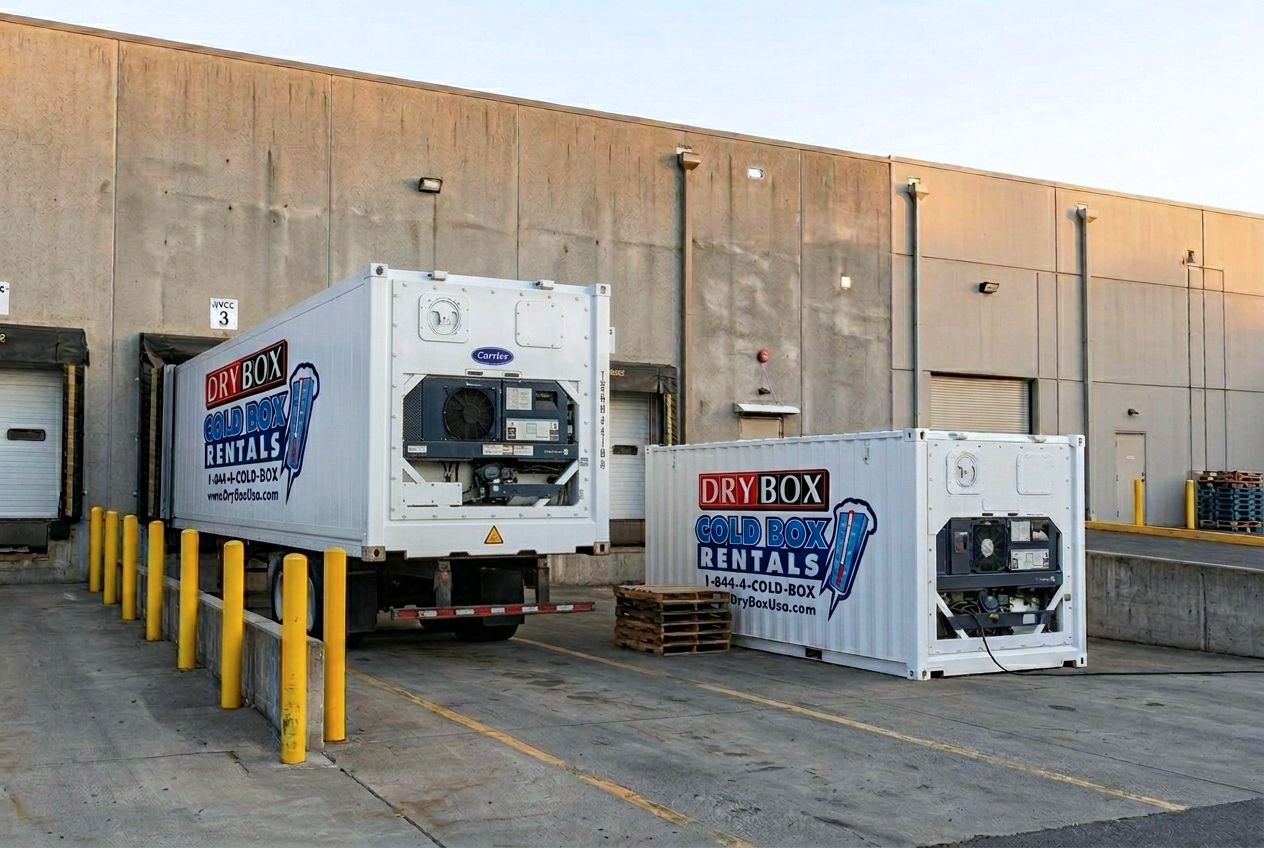
Every day, millions of shoppers walk into a big box store and fill their carts with fresh produce, frozen meals, dairy products, and deli meats. What most people never think about is the massive cold storage operation happening behind the scenes to keep all that food safe and fresh.
For big box retail stores like Costco, Walmart, Sam’s Club, and Target, managing refrigerated inventory is one of the most complex and high-stakes parts of their supply chain. A single temperature failure can spoil thousands of dollars in product and even put public health at risk.
According to the USDA Food Safety and Inspection Service, bacteria grow most rapidly between 40°F and 140°F, making constant refrigeration a non-negotiable for perishable goods.
So how do these retail giants keep everything cold, organized, and compliant? Dry Box provides a variety of portable cold storage solutions for big box stores.
What Is a Big Box Store and Why Does Cold Storage Matter?
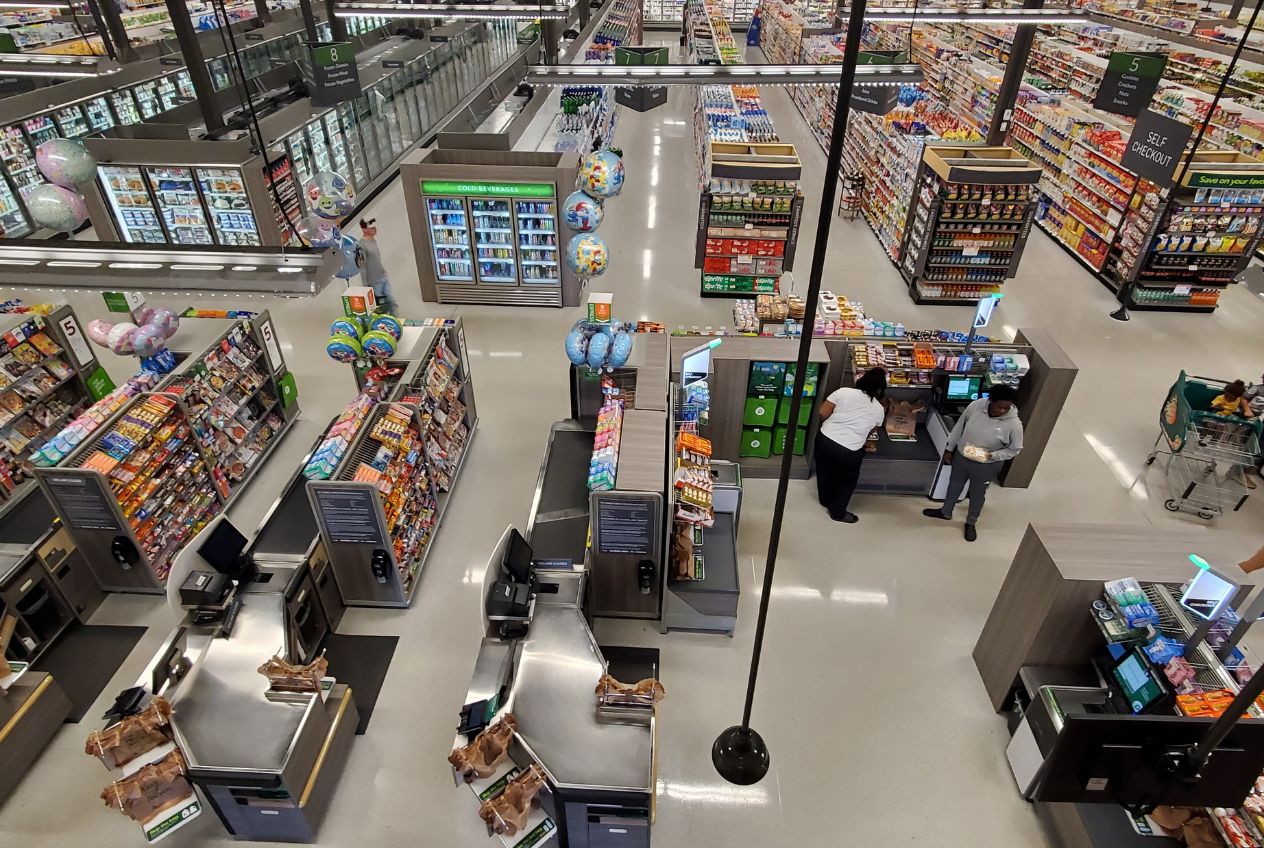
So what is a big box store, exactly?
It’s a physically large retail establishment, usually over 50,000 square feet, that sells high volumes of merchandise. Think warehouse-style layouts with wide aisles and bulk purchasing options. The grocery departments inside these stores rival many standalone supermarkets.
Because of their size, big box retail stores move perishable products at a staggering pace. A single location might cycle through tens of thousands of pounds of refrigerated and frozen goods every week.
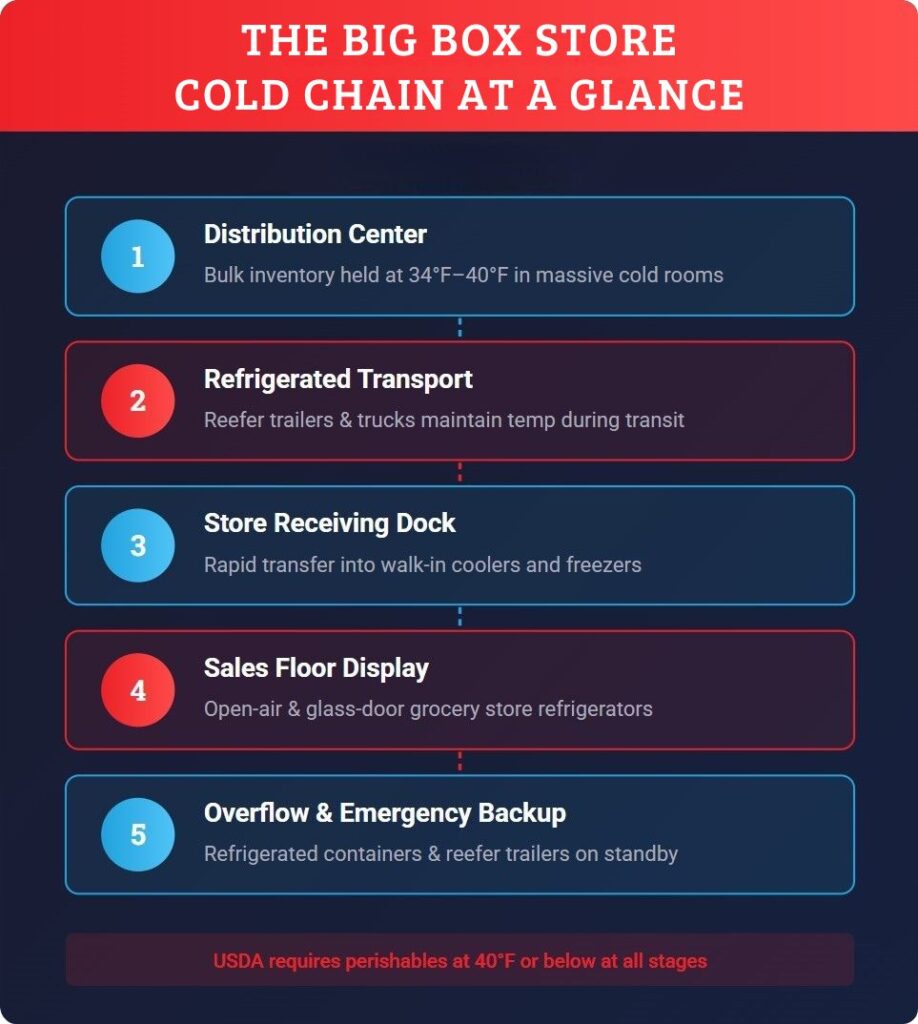
That volume demands a reliable cold chain from the distribution center all the way to the grocery store refrigerator on the sales floor.
When in-store refrigeration capacity falls short, the reefer trucks keep coming, so stores need backup options fast. That’s where portable and modular cold storage solutions can be very helpful.
Inside the Grocery Store Refrigerator System
Walk into any big box store’s grocery department and you’ll see rows of glass-door refrigerators, open-air coolers, and chest freezers. These units are the public-facing side of a much larger system.
Behind those swinging doors in the back of the store, you’ll find walk-in coolers and walk-in freezers that can hold pallets of product.
Most stores run centralized refrigeration systems that pump coolant through miles of tubing to every display case and cold room in the building. It’s an impressive setup, but it has limits.
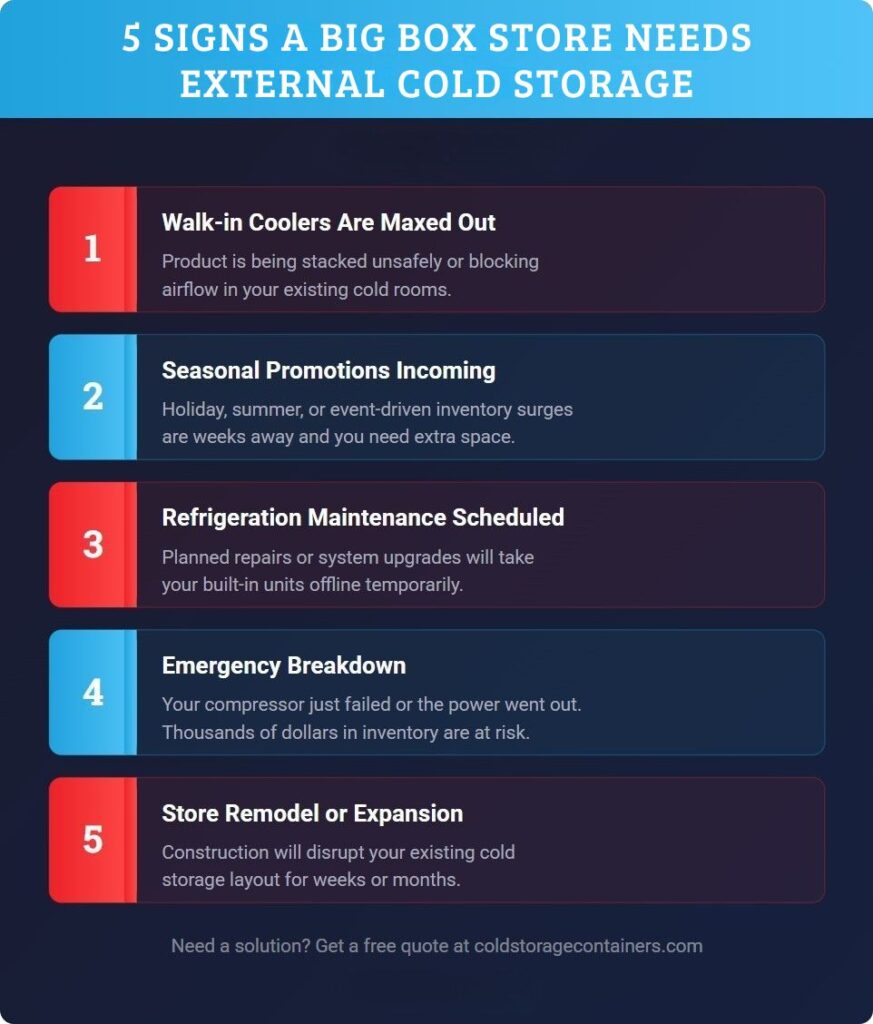
When seasonal promotions ramp up, when a new product launch floods the supply chain, or when the in-store system needs maintenance, stores need additional cold storage on the double.
That’s exactly where external solutions like a refrigerated shipping container from Dry Box become critical to the operation.
Options for Managing Excess Refrigerator Inventory
Big box retail stores have several tools in their playbook when on-site cold storage isn’t enough. The right choice depends on how much space they need, how long they need it, and how quickly they can get it.
Reefer Trailer Rentals
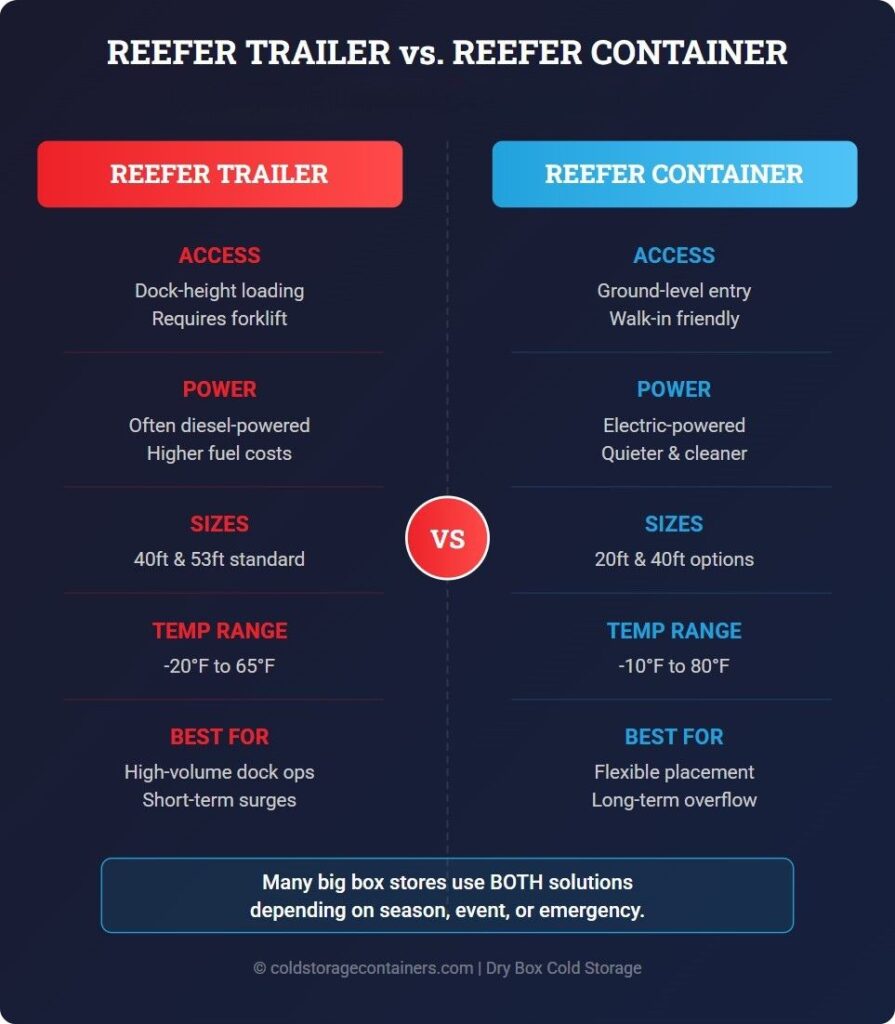
A reefer trailer rental is one of the fastest solutions for a big box store facing a cold storage crunch. These are standard refrigerated trailers, the same kind you see on highways, that can be parked at a loading dock and plugged in within hours.
Reefer trailers are dock-height, which makes loading and unloading simple with forklifts. Many big box stores keep one or two on standby during peak seasons like Thanksgiving, Christmas, and the Fourth of July.
They’re especially useful during major sales events when the volume of frozen turkeys or cases of ice cream surges beyond what the store can hold indoors.
Refrigerated Containers (Ground Level)
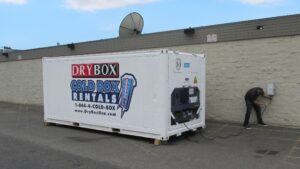
A refrigerated container offers a different advantage: ground-level access. Unlike a reefer trailer that sits at dock height, a reefer container sits on the ground, which means workers can roll carts and hand-carry items directly in and out.
These units typically come in 20-foot and 40-foot sizes and can maintain temperatures well below 0°F. They run on electric power rather than diesel, making them quieter, cleaner, and cheaper to operate.
For a big box store, a ground-level refrigerated container works perfectly for overflow storage near the back of the building or in the parking lot, but a reefer trailer is better for loading dock access.
Freezer Containers for Deep-Freeze Needs
Some inventory needs to go far below refrigerator temps. Ice cream, frozen seafood, and certain pharmaceutical products all require sub-zero storage. Freezer containers provide the excess storage for big box stores.
These specialized units can hold temperatures well below 0°F, giving big box stores a reliable deep-freeze backup when their internal freezers hit capacity.
During the holiday season, a single big box store might sell hundreds of frozen turkeys per day. Having a freezer container parked out back keeps the supply chain flowing without overloading the in-store systems.
Emergency Cold Storage
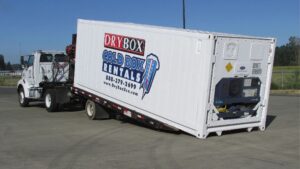
Equipment breaks down. Power outages happen. Refrigeration system failures don’t wait for a convenient time. When a big box store loses its cooling capability, every minute counts. That’s when emergency cold storage goes from a nice-to-have to a business-saving necessity.
Portable cold storage containers can be delivered to a store location within hours in many cases. These plug-and-play units connect to standard electrical power and start cooling immediately.
For a big box store sitting on hundreds of thousands of dollars in perishable inventory, that kind of rapid response can prevent a total loss.
Seasonal Spikes and How Big Box Retail Stores Handle Them
Seasonal demand creates predictable but intense pressure on refrigerated inventory systems. Big box stores plan months ahead for events that cause huge surges in perishable product sales.
Here are the peak periods that typically push stores past their built-in cold storage limits:
- Thanksgiving and Christmas bring massive demand for frozen turkeys, hams, pies, and refrigerated side dishes
- Super Bowl weekend drives surges in frozen appetizers, deli platters, and beverages
- Fourth of July and Memorial Day spike demand for fresh meat, ice cream, and cold drinks
- Back-to-school season increases purchases of lunchbox staples like yogurt, deli meat, and cheese
- Spring and Easter create runs on refrigerated baked goods and fresh produce
During these windows, it’s common for big box stores to rent one or more reefer containers to supplement their permanent cold rooms.
The math is simple: spending a few hundred dollars a month on a container rental is far cheaper than losing thousands in spoiled products.
The Growing Role of Refrigerated Shipping Containers in Retail
The use of refrigerated shipping containers in retail operations has grown steadily over the past decade. Originally designed for ocean freight, these rugged steel units have found a second life as on-site cold storage for businesses of all sizes.
For big box stores, the appeal is straightforward. A refrigerated shipping container is durable, portable, and can be placed almost anywhere there’s a flat surface and a power connection.
Unlike building a permanent walk-in cooler, renting a reefer container involves zero construction and minimal lead time.
Stores that regularly deal with inventory fluctuations are now building portable cold storage into their annual logistics budgets rather than treating it as an emergency-only expense. It’s a smarter way to plan.
How to Choose the Right Cold Storage Solution for a Big Box Store
Not every situation calls for the same equipment. The decision between a reefer trailer rental, a refrigerated container, or a dedicated freezer container depends on a handful of factors specific to each store’s setup.
Here’s what store managers and logistics teams should consider:
- Loading dock availability: If the store has a free dock bay, a reefer trailer slides right in. If not, a ground-level container may be the better fit.
- Duration of need: Short-term seasonal surges might favor a trailer rental, while ongoing overflow is better served by a refrigerated shipping container on a monthly lease.
- Temperature requirements: Standard refrigeration (34°F to 40°F) vs. deep freeze (below 0°F) will narrow down the options.
- Space and placement: Containers can go in parking lots, behind buildings, or on any flat surface. Trailers need more room to maneuver.
The best cold storage providers, like Dry Box, will assess your site, recommend the right unit, deliver it, and help you start it up. That kind of hands-on support matters when you’re racing against the clock to protect perishable goods.
Beyond Retail: Why Portable Storage Containers Are a Smart Investment
Big box stores aren’t the only businesses benefiting from portable refrigerated solutions. Restaurants, grocery stores, farms, breweries, and even medical facilities are using reefer containers for on-demand cold storage.
Whether you’re looking to maintain the perfect wine temperature or keep seafood frozen, the flexibility of these units makes them practical for any operation that handles temperature-sensitive products.
For big box retail stores, though, the stakes are especially high. Their brand reputation rides on the quality and safety of the products they sell. Having a reliable cold storage partner isn’t a luxury. It’s part of doing business at scale.
If your store or business needs additional cold storage capacity, explore rental options for shipping containers and refrigerated units that can be delivered quickly and set up with minimal hassle.
Frequently Asked Questions About Refrigerated Containers for Big Box Stores
How much does it cost to rent a refrigerated container for a big box store?
Rental prices vary based on the size of the unit, the duration of the rental, and your location. A reefer container rental typically starts around a thousand per month depending on the time of the year.
Delivery and pickup fees are usually separate. Contact Cold Storage Containers for a custom quote based on your store’s needs.
Can a refrigerated container run on a standard electrical outlet?
Most commercial refrigerated containers require a 220V or 460V power supply rather than a standard household outlet. We will specify the exact electrical requirements for reefer containers before delivery and can advise on generator options if dedicated power isn’t available at the placement site.
It’s recommended to work with a licensed electrician to ensure a safe connection.
Are portable reefer containers USDA-certified for food storage?
Yes, many portable reefer containers are USDA-certified for storing food products. Dry Box maintains units with stainless steel interiors and food-grade flooring that meet federal food safety standards. Always confirm certification with the rental company before signing a contract.
How quickly can a refrigerated container be delivered in an emergency?
In many regions, same-day or next-day delivery is available for emergency situations. Dry Box has multiple depot locations to dispatch units faster and more affordably. It’s a good idea for big box stores to establish a relationship with a cold storage vendor before an emergency strikes so that response times are as fast as possible.
Do big box stores buy or rent their external cold storage units?
Most big box stores rent their external cold storage units rather than purchasing them. Renting offers flexibility to scale up during peak seasons and scale back down when demand normalizes. Some stores with consistent year-round overflow may choose to purchase a unit outright to save on long-term costs.