

Best Reefer Options for Local Butchers
Running a butcher shop means every minute counts when it comes to temperature. From the moment a carcass is broken down to the second a customer walks out the door with a wrapped brisket, the cold chain cannot break.
That is exactly why choosing the right cold storage setup is one of the most important business decisions a local butcher will ever make.
This guide walks through the best refrigeration solutions available to butcher shops today. We will cover everything from a portable refrigerated container rental parked outside your building to a dedicated dry age fridge tucked inside your cutting room.
Why Local Butchers Need Additional Meat Freezer Space
Butcher shops deal with a product that spoils fast. Unlike canned goods or dry pantry items, raw meat enters the bacterial “danger zone” between 40°F and 140°F within minutes of leaving a controlled environment.
The USDA Food Safety and Inspection Service stresses that ground beef must stay at or below 40°F and be used within one to two days of refrigeration.
For a butcher, that tight timeline means your meat freezer and refrigeration setup needs to be oversized for your volume, not undersized. Running out of cold space during a holiday rush or a weekend sale can cost you thousands in spoiled inventory. It can also cost you your reputation.
Beyond day-to-day storage, many butchers are expanding into specialty services like dry-aged steaks and custom processing for local ranchers. These services demand precise, consistent temperatures that only commercial-grade refrigeration can deliver.
The right meat freezer for proper storage turns your shop from a simple retail counter into a full-service meat distibutor.
Ideal Frozen Meat Storage Time
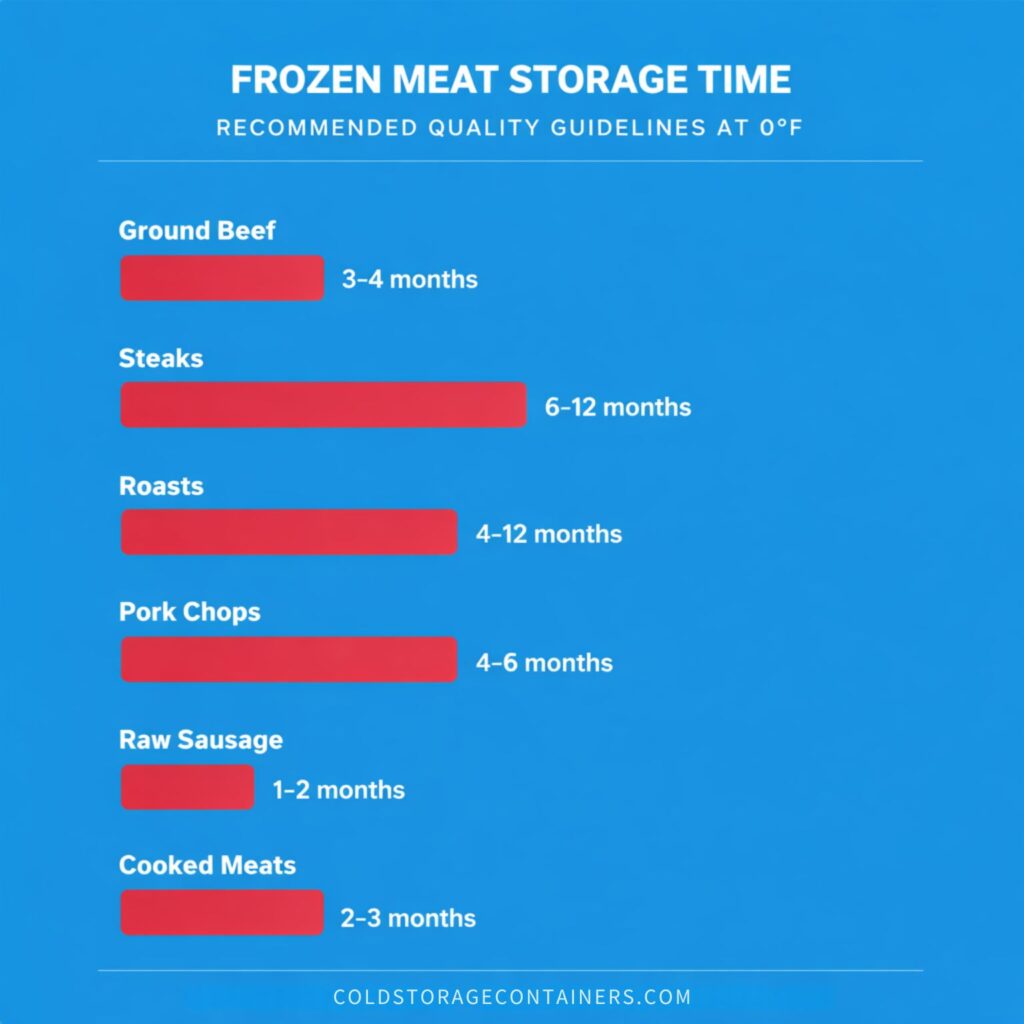
Understanding frozen meat storage time is essential for maintaining both flavor and food safety in a professional butcher shop. While bacteria cannot grow in a meat freezer kept at a consistent 0°F, the quality of the meat will eventually degrade due to sublimation and oxidation.
For optimal results, whole steaks and roasts can be stored for 6 to 12 months. However, ground beef has more surface area exposed to air, so it should ideally be moved within 3 to 4 months to avoid freezer burn.
Using airtight meat storage containers or vacuum-sealed packaging significantly extends the lifespan of your inventory. If you use a high-quality refrigerated container for long-term holding, ensure you rotate your stock using the “First In, First Out” method. This practice ensures every customer receives a product that tastes fresh.
Comparing Your Best Reefer Options
Not every butcher shop has the same space, budget, or volume. That is why there are several distinct cold storage solutions worth considering.
Here is a breakdown of the most common options and what makes each one a fit for different situations.
Refrigerated Container
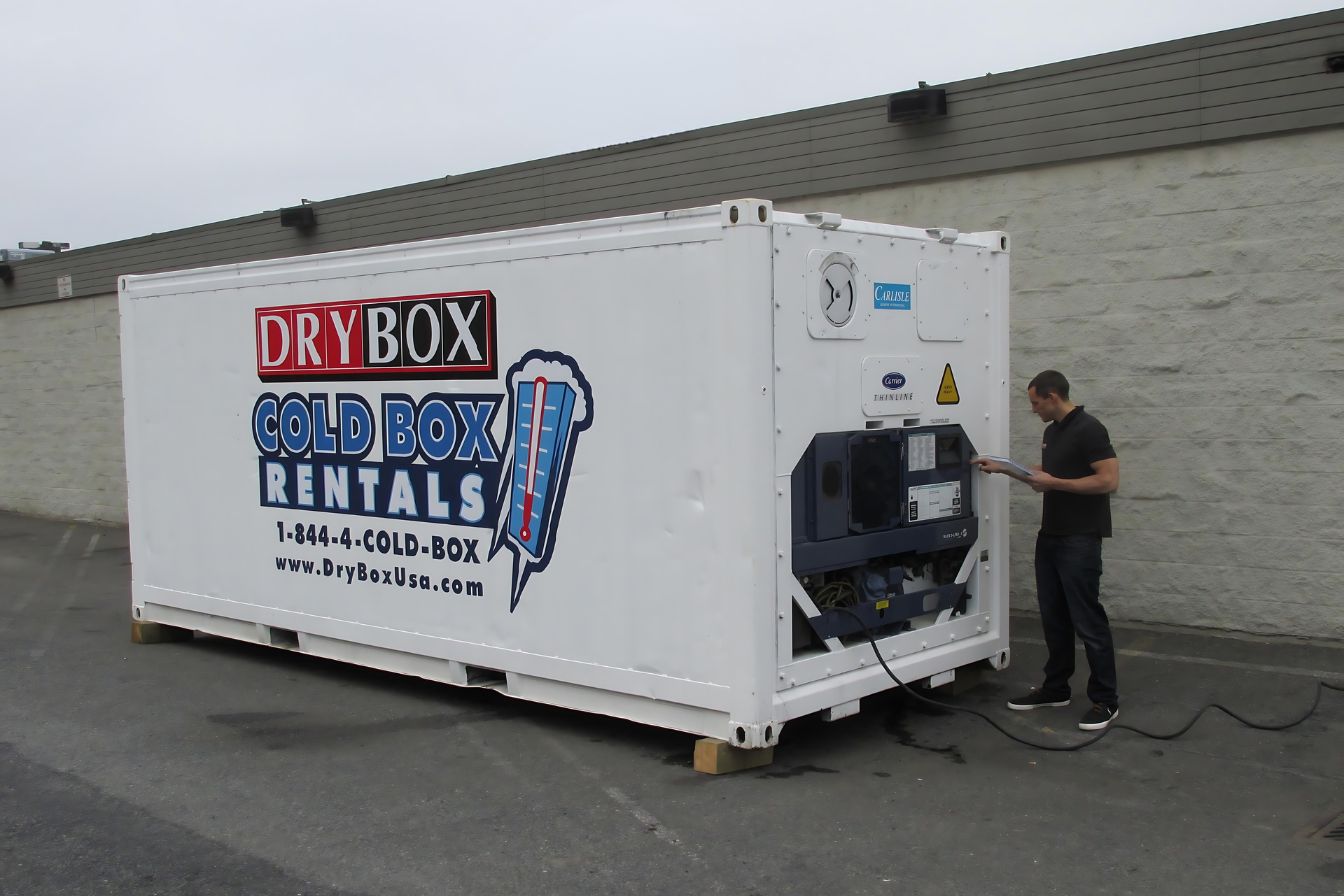
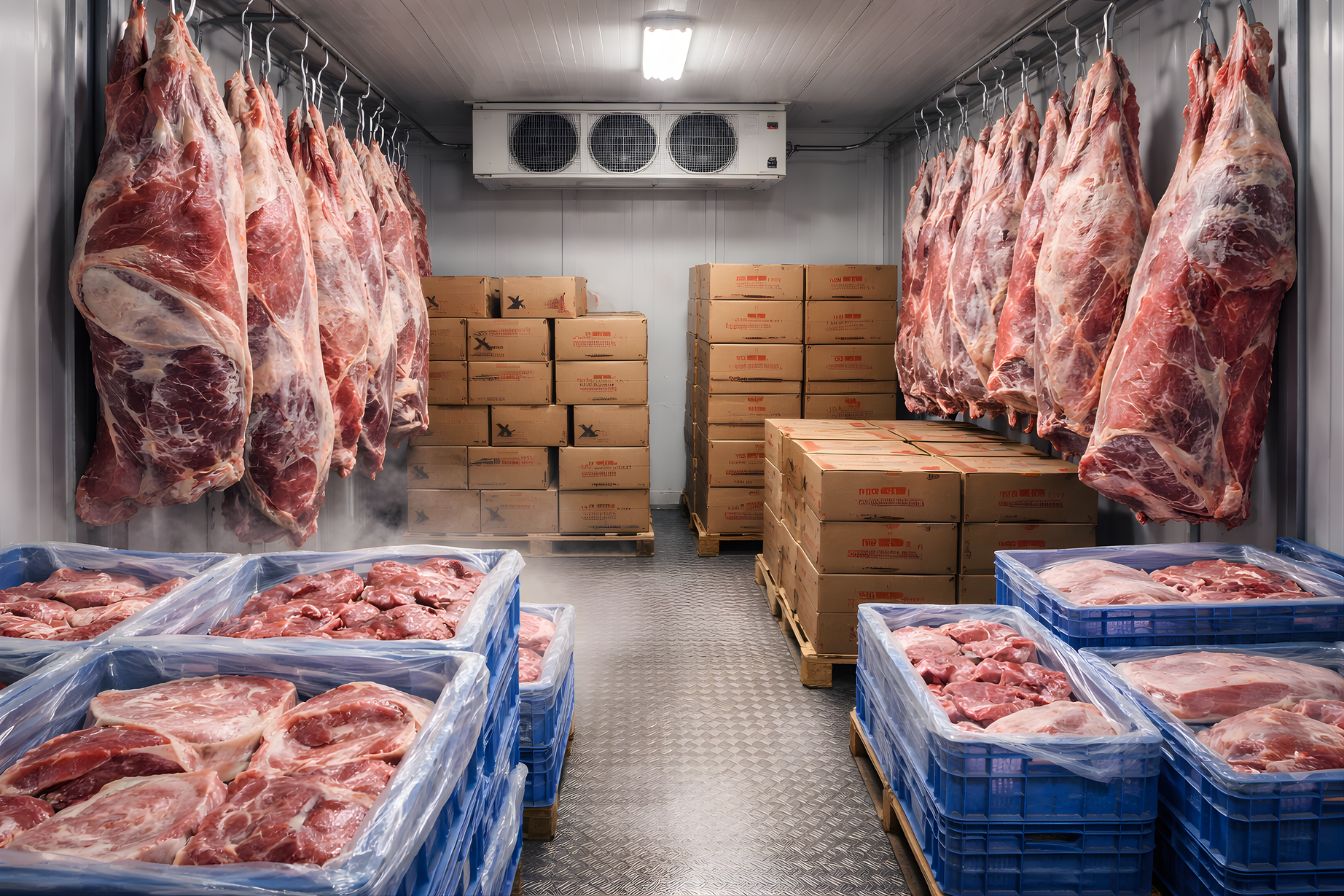
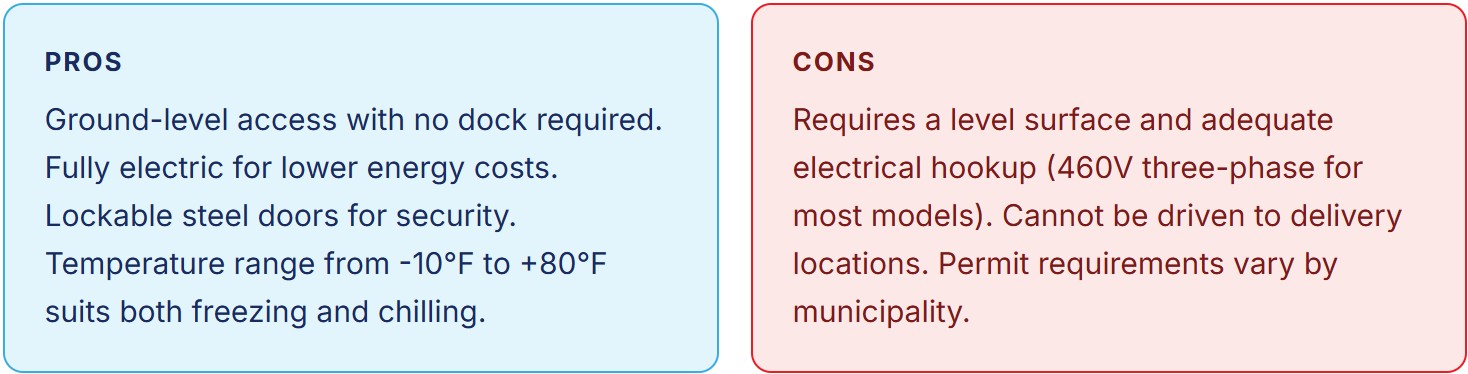
Above is a 20ft refrigerated container, a ground-level cold storage unit that plugs into a standard electrical connection. These are the meat storage containers of choice for butcher shops that lack a loading dock. You simply roll a hand truck or walk product straight in through the steel double doors.
Dry Box supplies fully electric refrigerated containers with seamless stainless steel walls and heavy-duty aluminum floors built to withstand forklifts.
Because they run on electricity instead of diesel, they save butchers thousands in monthly operating costs. They are available in 10-foot, 20-foot, and 40-foot sizes, giving you flexibility as your business grows.
Reefer Trailer
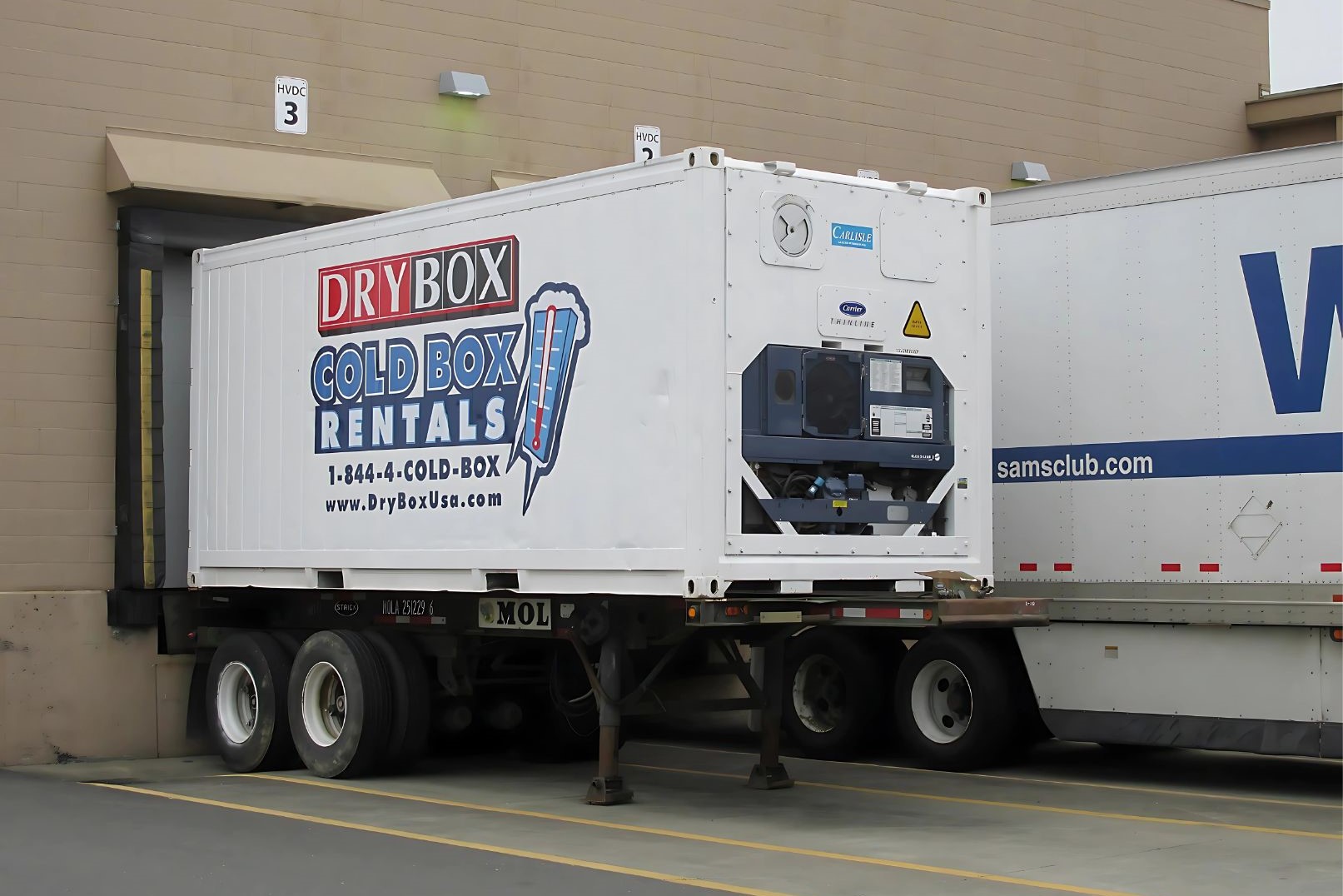
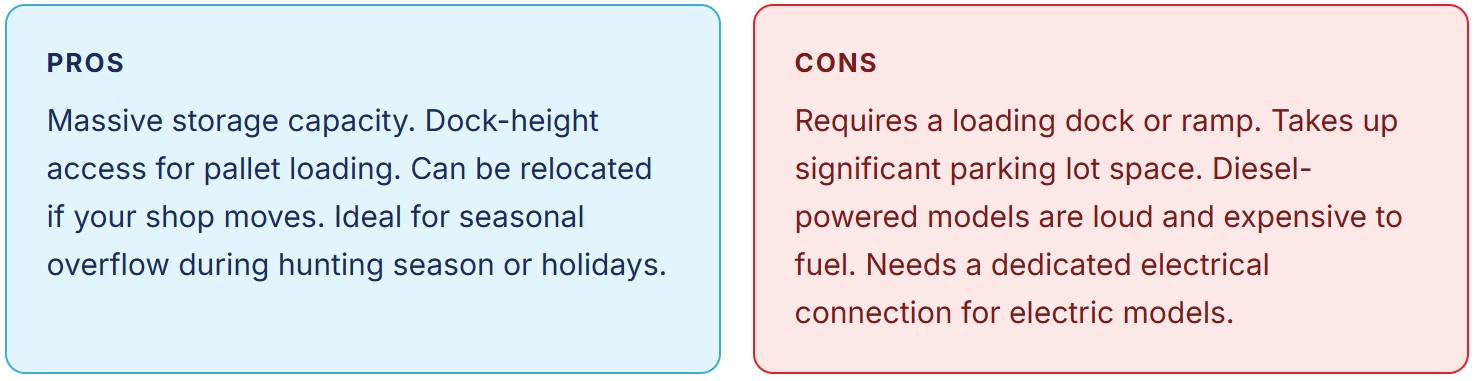
A freezer trailer or reefer trailer is a refrigerated semi-trailer that sits at dock height, making it perfect for shops with a loading dock or raised platform. These units typically come in 20-foot and 40-foot sizes and can hold temperatures as low as -10°F.
For butchers processing large volumes of whole animals or supplying restaurants, a reefer trailer delivers serious capacity without a permanent construction project. If you are searching for a reefer trailer for sale, you can find both new and used options.
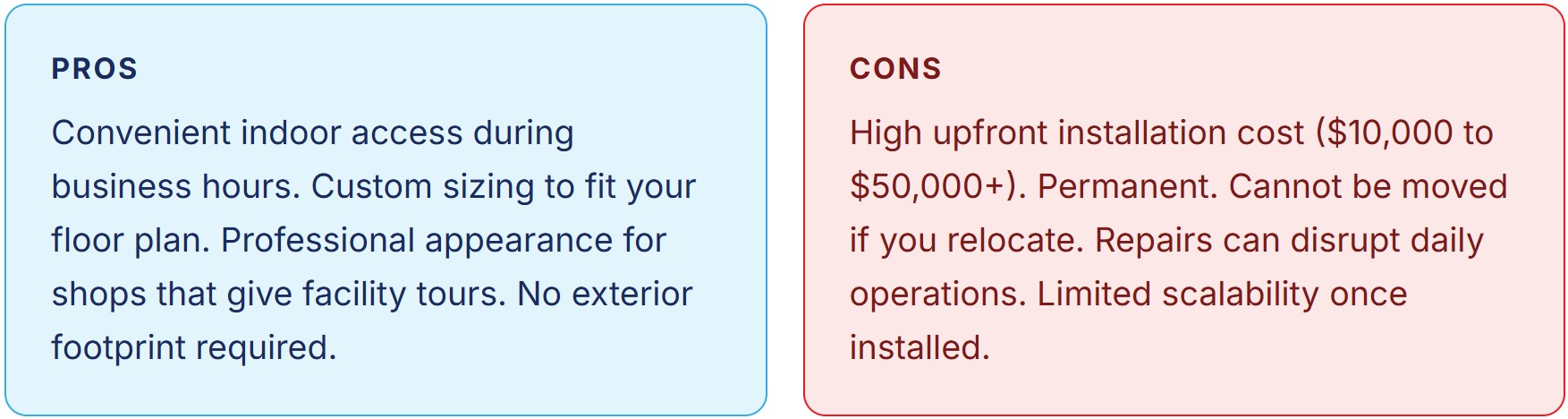
Walk-In Freezer
A traditional walk-in freezer is a permanent, built-in structure inside your shop. It is the standard choice for butchers who own their building and plan to stay for the long haul.
Walk-in units let you organize products on shelving systems and keep everything within arm’s reach of your cutting room.
Reefer Truck
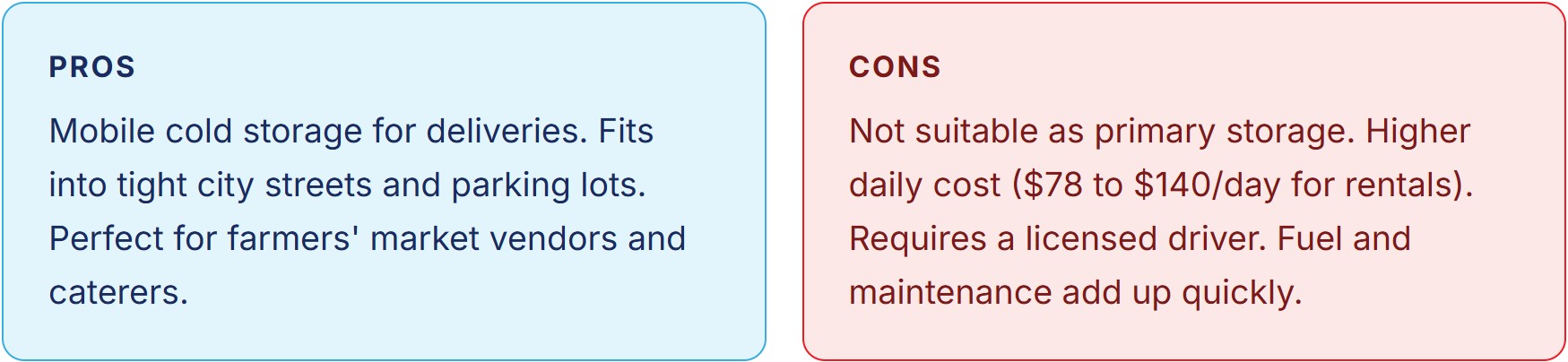
A reefer truck is the right call for butchers who deliver product to restaurants, farmers’ markets, or catering events. These refrigerated box trucks range from 10 to 28 feet and keep your cuts at safe temperatures during transit.
They are not a replacement for on-site storage, but they complete the cold chain from your shop to the customer’s door.
The Art of the Dry Age Fridge
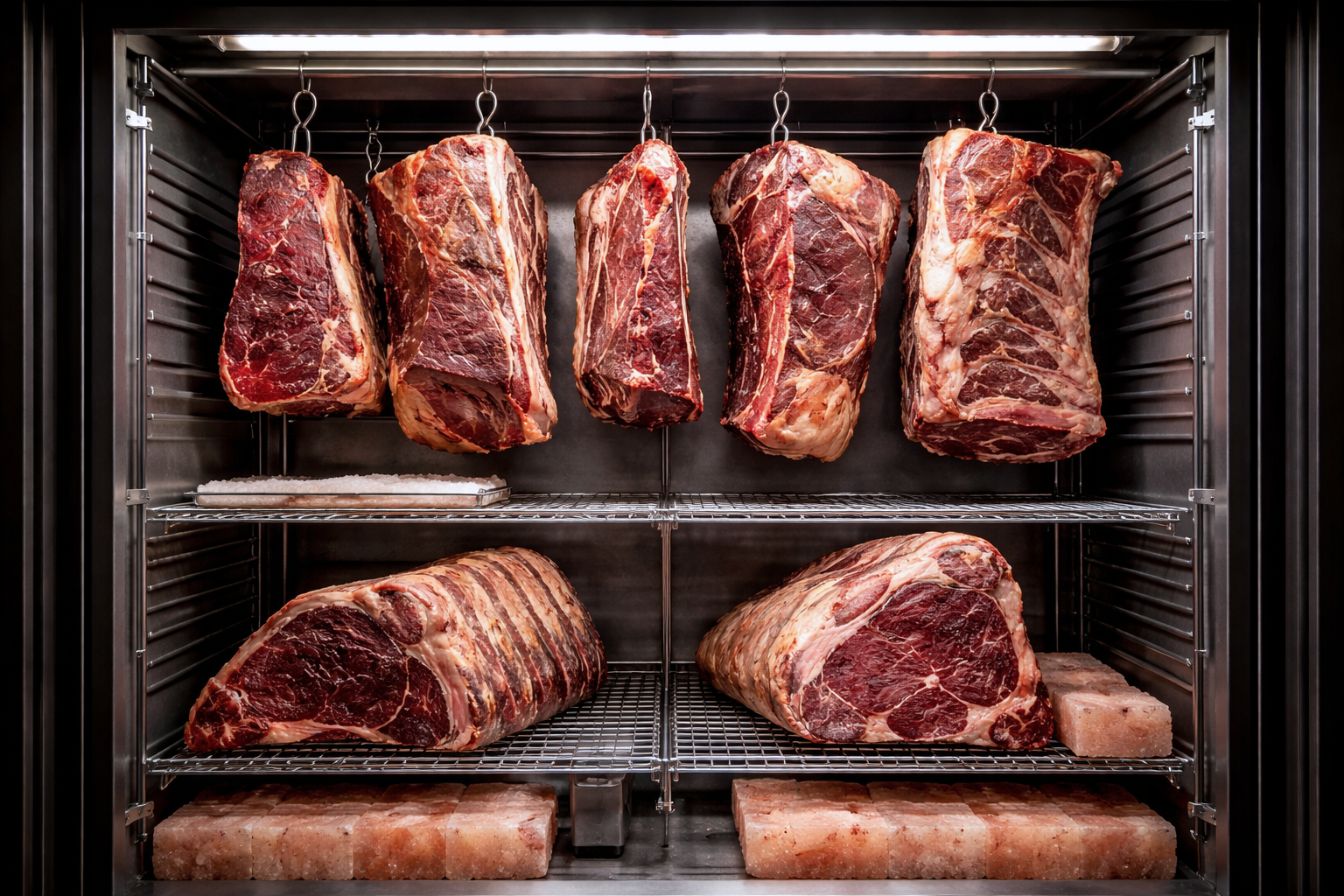
If you want to offer premium, high-margin products, you should look into a dry age fridge. This is not just a standard cooler. It is a highly specialized environment designed to transform beef into a culinary masterpiece.
How it Works
A dry age fridge regulates three main variables: temperature, humidity, and airflow. The temperature is kept just above freezing, usually between 34°F and 38°F. Meanwhile, the humidity stays around 75% to 85%. This environment allows natural enzymes to break down the connective tissue in the meat.
The result is a steak that is incredibly tender with a concentrated, nutty flavor. Unlike a standard meat freezer, these units often include UV sterilization to kill any surface bacteria during the weeks-long aging process.
Choosing the Right Meat Storage Containers
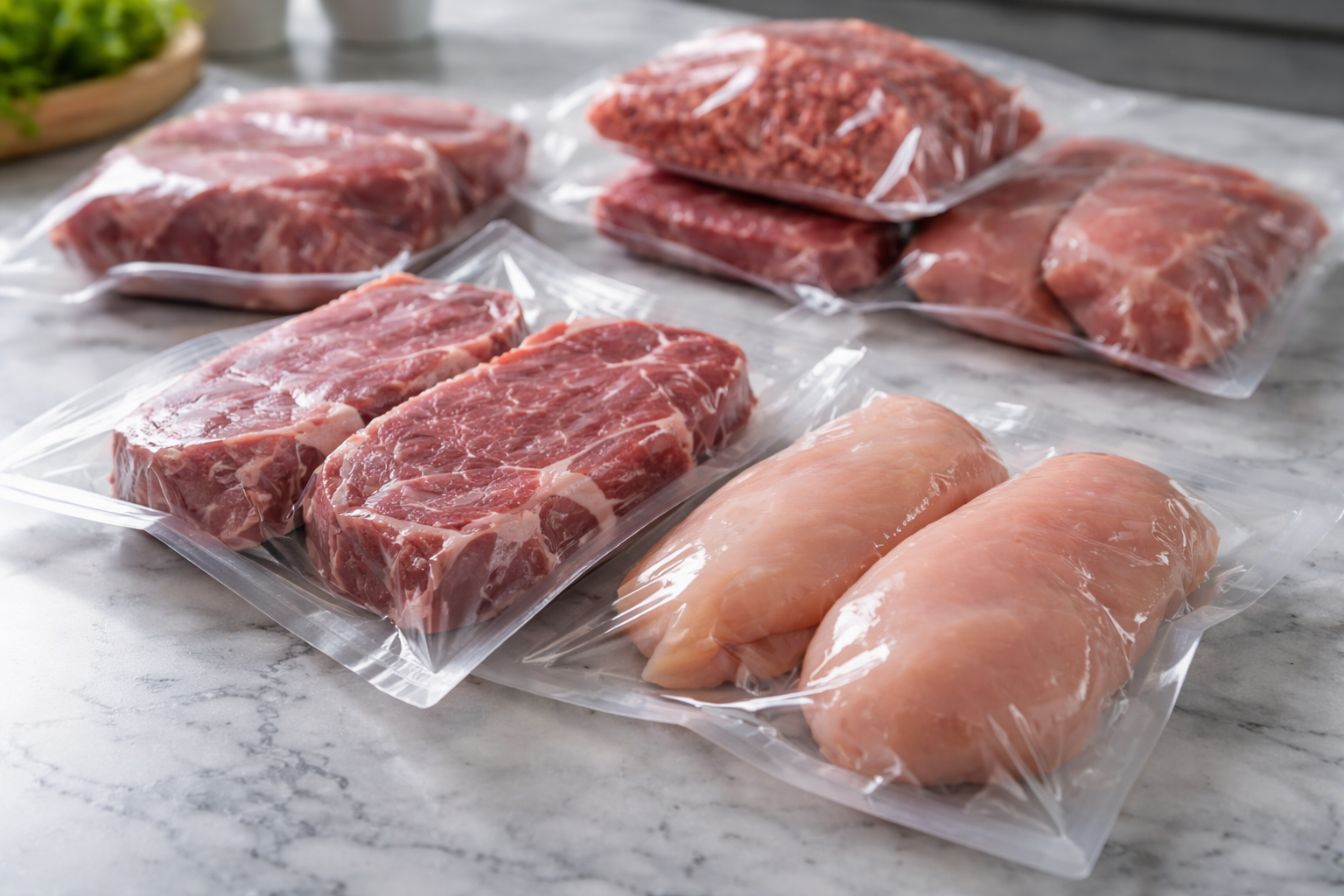
Organization is the secret to a profitable butcher shop. Using the right meat storage containers prevents cross-contamination and freezer burn.
- Bulk Bins: Large, food-grade plastic bins are great for holding primal cuts before they are processed.
- Vacuum Sealed Bags: These are the best freezer storage containers for meat because they remove all oxygen, which prevents ice crystals from forming.
- Stainless Steel Trays: Ideal for the dry age fridge because they allow for maximum airflow around the entire cut of meat.
Protect Your Product, Grow Your Business
The right cold storage setup protects your inventory, supports food safety, and opens the door to premium services like dry aging.
For most local butchers, a combination of an indoor walk-in cooler and an outdoor refrigerated container or reefer trailer provides the ideal balance of convenience, capacity, and cost.
Take the time to evaluate your space, your volume, and your growth plans. Then talk to a supplier who understands the meat industry and can match you with the right freezer for meat storage. Your product, your customers, and your bottom line will all benefit from the investment.
Frequently Asked Questions About Cold Storage For Butchers
How long can ground beef stay in the fridge?
According to USDA safety guidelines, raw ground beef should only stay in the fridge for 1 to 2 days. Because grinding meat exposes more surface area to oxygen and bacteria, it spoils much faster than whole steaks or roasts. If you cannot use it within 48 hours, move it to a dedicated frozen meat storage unit immediately.
Can I Use a Refrigerated Container as a Walk-In Cooler for My Butcher Shop?
Absolutely. Many butcher shops park a refrigerated container or reefer trailer right outside their back door and use it as overflow cold storage or even as their primary walk-in cooler.
Because these units can maintain temperatures anywhere from -10°F to +80°F, you can set one up as a cooler for fresh cuts and another as a dedicated meat freezer for long-term stock.
Should I buy or rent a refrigerated trailer?
If you only need extra space for the busy winter months, renting a refrigerated trailer is the way to go.
However, if your business is growing year-round, looking for a reefer trailer for sale can be a better long-term investment. Owning your equipment allows you to modify the interior with custom shelving for your specific meat storage containers.
How Do I Keep Meat Safe During a Power Outage?
A fully loaded, well-insulated freezer can maintain safe temperatures for approximately 48 hours if the door stays closed. A half-full freezer holds for about 24 hours.
If your area is prone to outages, consider pairing your walk-in unit with a backup generator. Portable reefer containers from Dry Box can also run on generator power, giving you a secondary cold storage failsafe when the grid goes down.