


Portable Refrigeration For Vaccine or Medication Distributors
Disclaimer: Consult the CDC’s current Vaccine Storage and Handling Toolkit and your state pharmacy board for compliance requirements.
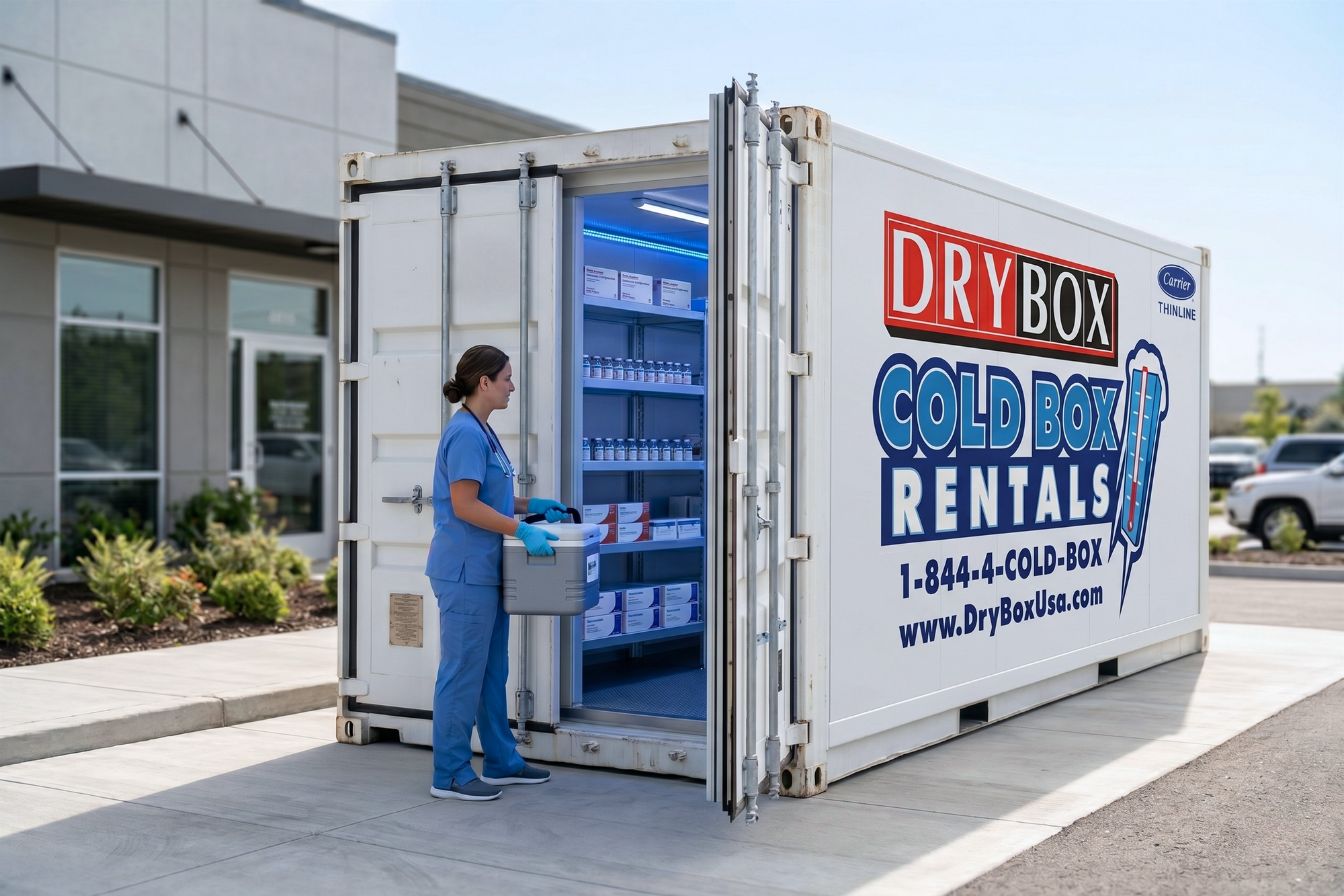
Portable refrigeration for vaccine and medication distributors includes reefer containers, refrigerated trailers, and insulated transport coolers that maintain CDC-recommended temperatures for standard vaccines. These solutions allow distributors to store and move temperature-sensitive pharmaceuticals without breaking the cold chain, protecting potency from warehouse to patient.
Vaccine storage requires temperature control. That is the reality facing every business involved in vaccine transportation and medication delivery. Temperature failures can delay immunization campaigns, trigger regulatory violations, and put patient health at risk.
Any reading outside the product manufacturer’s specified range is a temperature excursion requiring immediate documentation and evaluation. Do not use or discard affected product until directed by the manufacturer or appropriate public health authority.
For distributors operating a medicine distribution business, the challenge is keeping products cold across every link in the supply chain. Dry Box provides a variety of portable cold storage solutions to help keep this vital supply chain safe.
From full-size 40-foot refrigerated shipping containers to compact insulated coolers, this guide breaks down the equipment, temperatures, and best practices that keep every dose safe.
Why Are Vaccines Transported in the Cold?
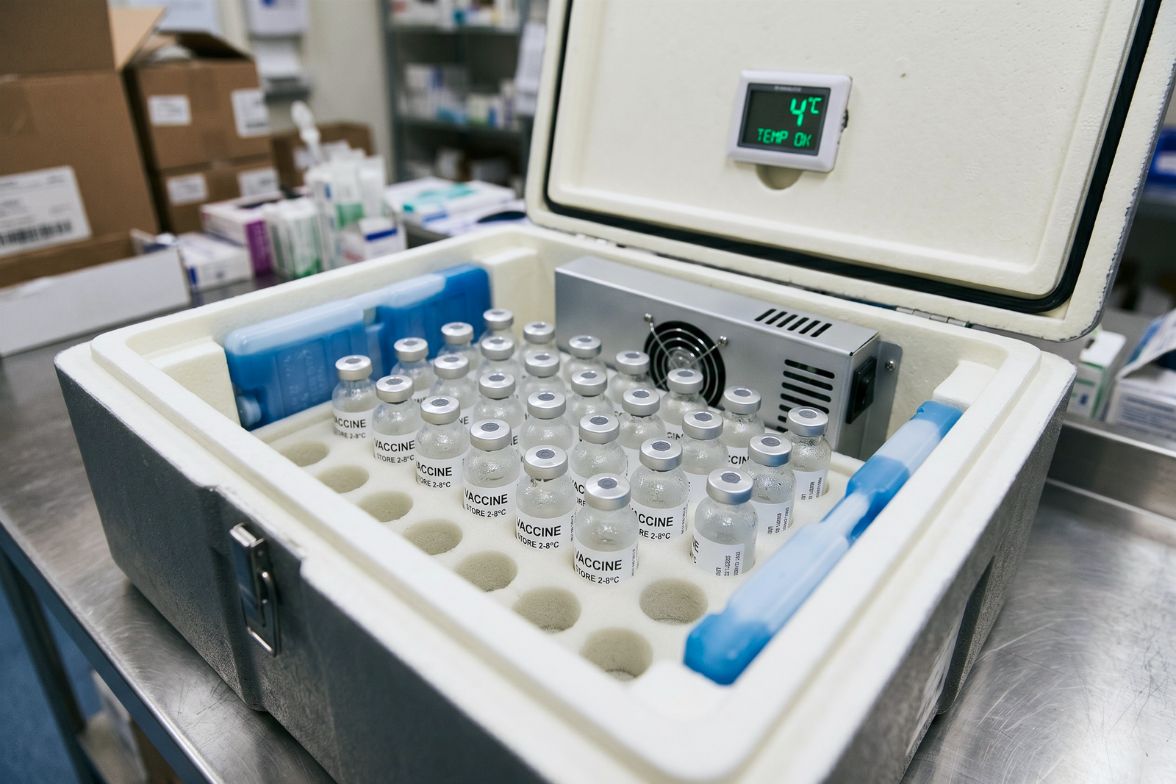
Vaccines are biological products made from weakened viruses, proteins, or mRNA molecules. Each component is fragile. Heat accelerates chemical degradation, and freezing can damage adjuvants that boost immune response.
A compromised vial looks identical to a properly stored one, but it may produce little or no immunity when injected. According to the CDC’s guidelines on immunobiologic storage, failure to maintain recommended conditions can reduce or destroy vaccine potency. That is why regulatory bodies require unbroken “cold chains” from manufacturing to administration.
Vaccine Storage Temperature: Know the Ranges
Not every vaccine requires the same conditions. The vaccine storage temperature depends on the product type. Standard refrigerated vaccines like influenza, Hepatitis B, and DTaP must stay between 36°F and 46°F (2°C to 8°C), according to the CDC.
Frozen vaccines like Varicella and MMRV need 5°F (-15°C) or colder, according to the CDC. Some mRNA formulations require ultra-cold storage as low as -112°F (-80°C). The CDC recommends continuous monitoring using digital data loggers recording at least every 30 minutes. These types of items may require a freezer trailer.
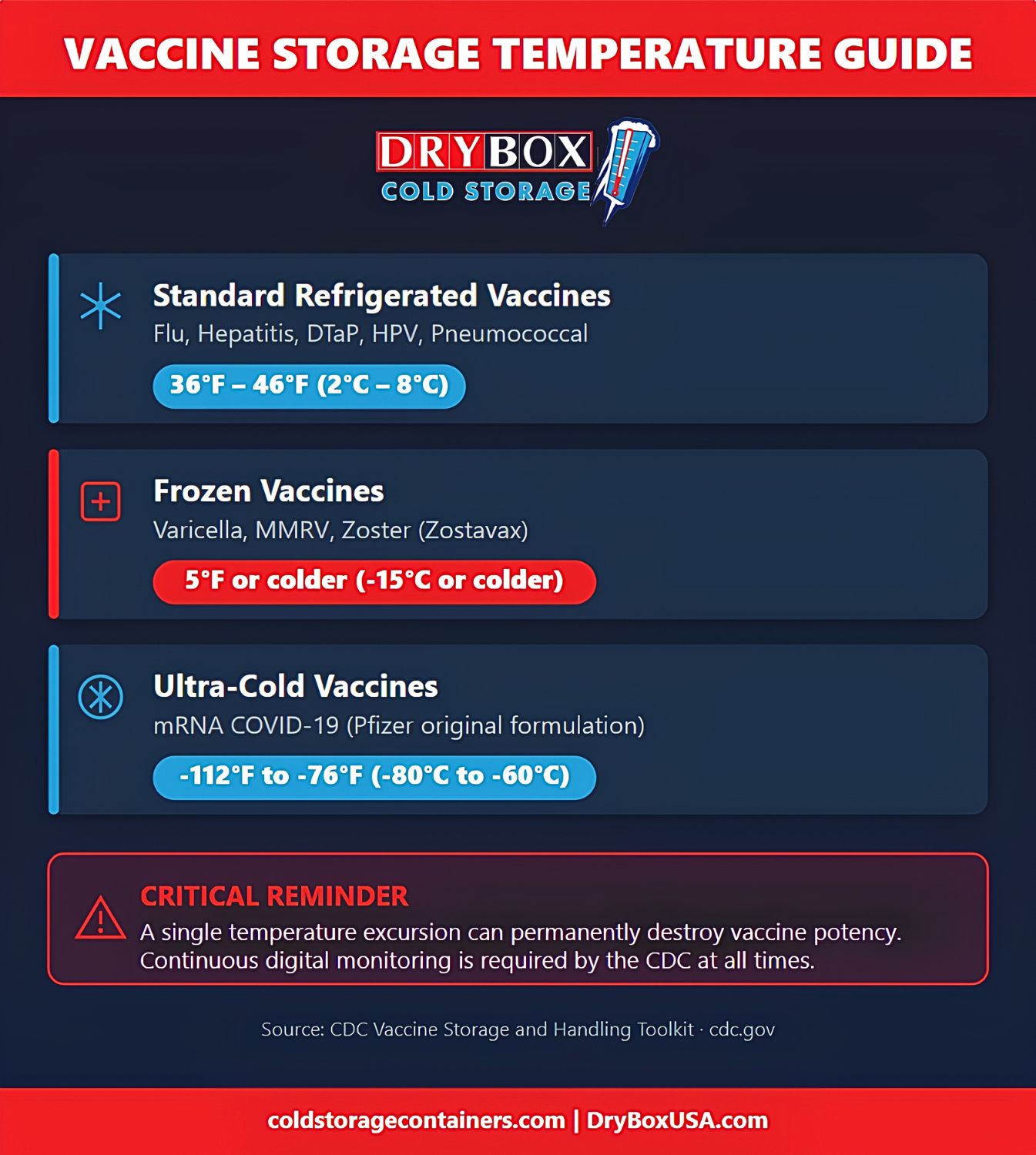
Understanding these ranges is critical for anyone running a vaccine storage fridge or selecting a portable refrigerator for medicine. The wrong setting does not just risk compliance penalties. It risks patients receiving vaccines that no longer work.
Vaccine Cold Storage Solutions: Portable Options for Distributors
Distributors have more portable cold storage options than ever. The right choice depends on volume, mobility, and how long products need to stay at temperature.
Refrigerated Shipping Containers (Reefer Containers)
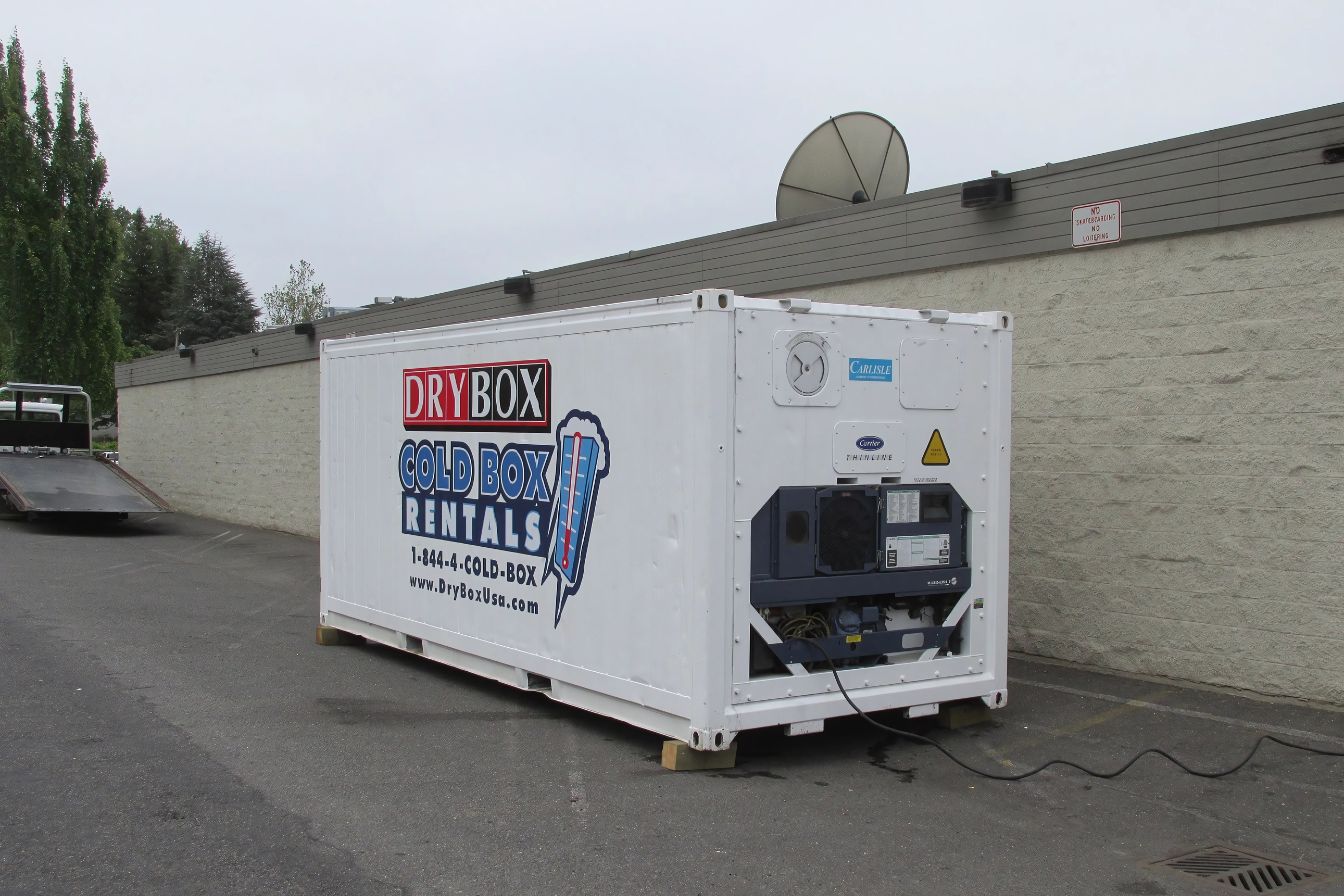
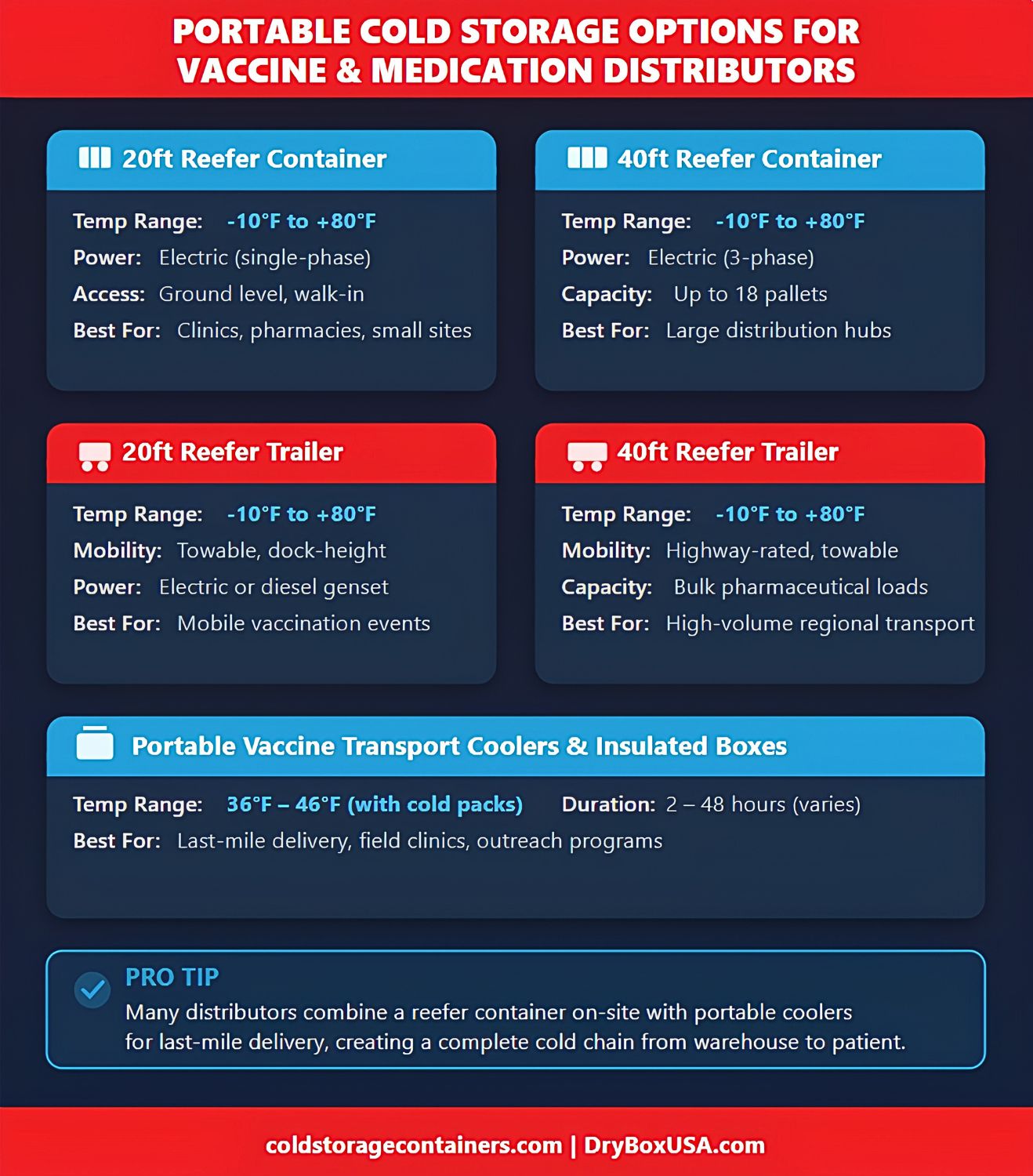
Reefer containers are modified steel shipping containers with built-in refrigeration capable of holding temperatures from -10°F to +80°F. They come in 20-foot and 40-foot sizes and can be placed on any level surface.
For distributors who need a reliable vaccine storage fridge on-site, these containers offer walk-in access, stainless steel interiors, and precise temperature control on electric power.
Reefer Trailers
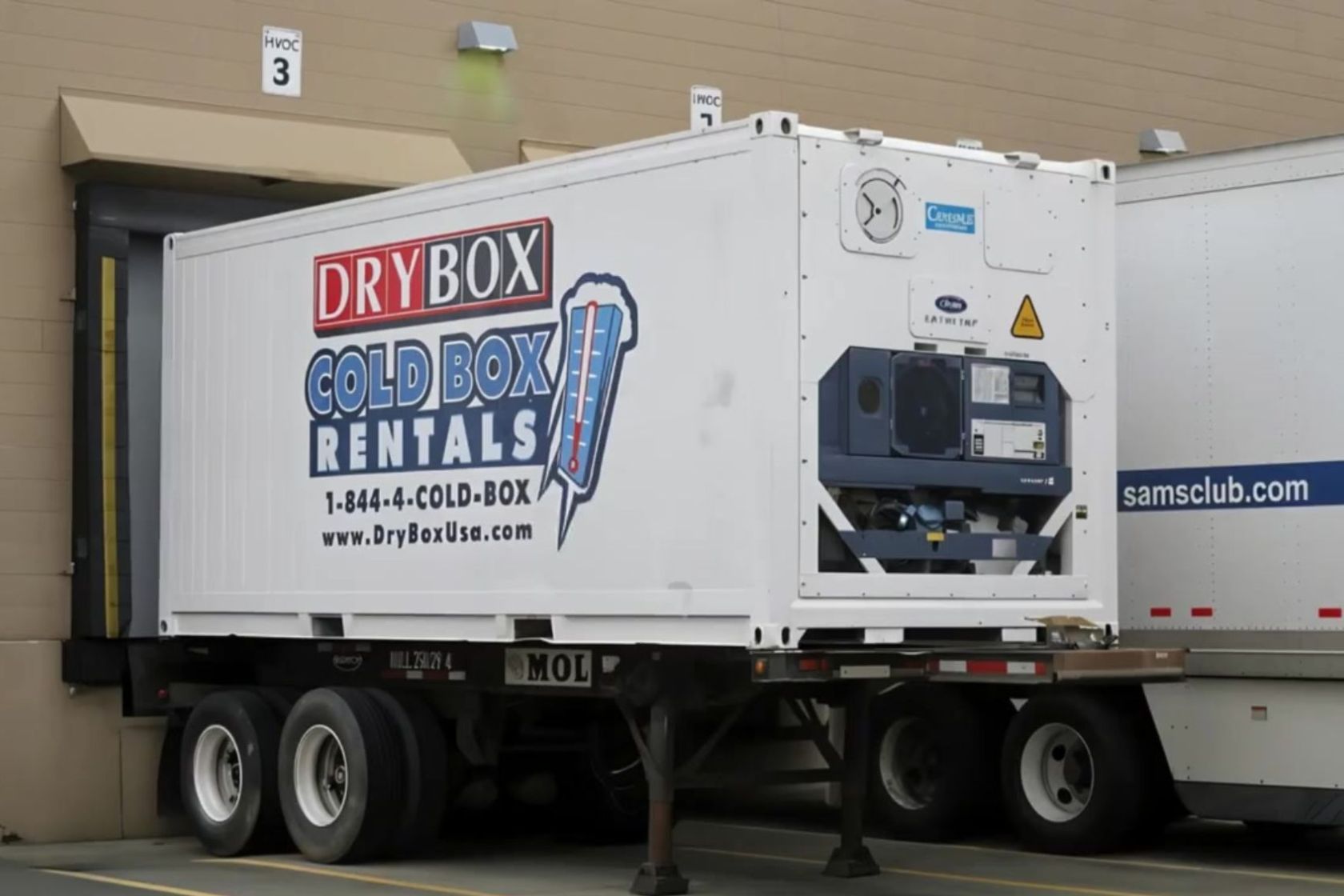
When mobility is a top priority, reefer trailers allow distributors to transport large quantities on the road. Available in 20-foot and 40-foot configurations, these trailers are dock-height and highway-rated. They run on three-phase electric power when parked or a diesel generator for transport, making them a flexible vaccine transport cooler solution.
Portable Vaccine Transport Coolers
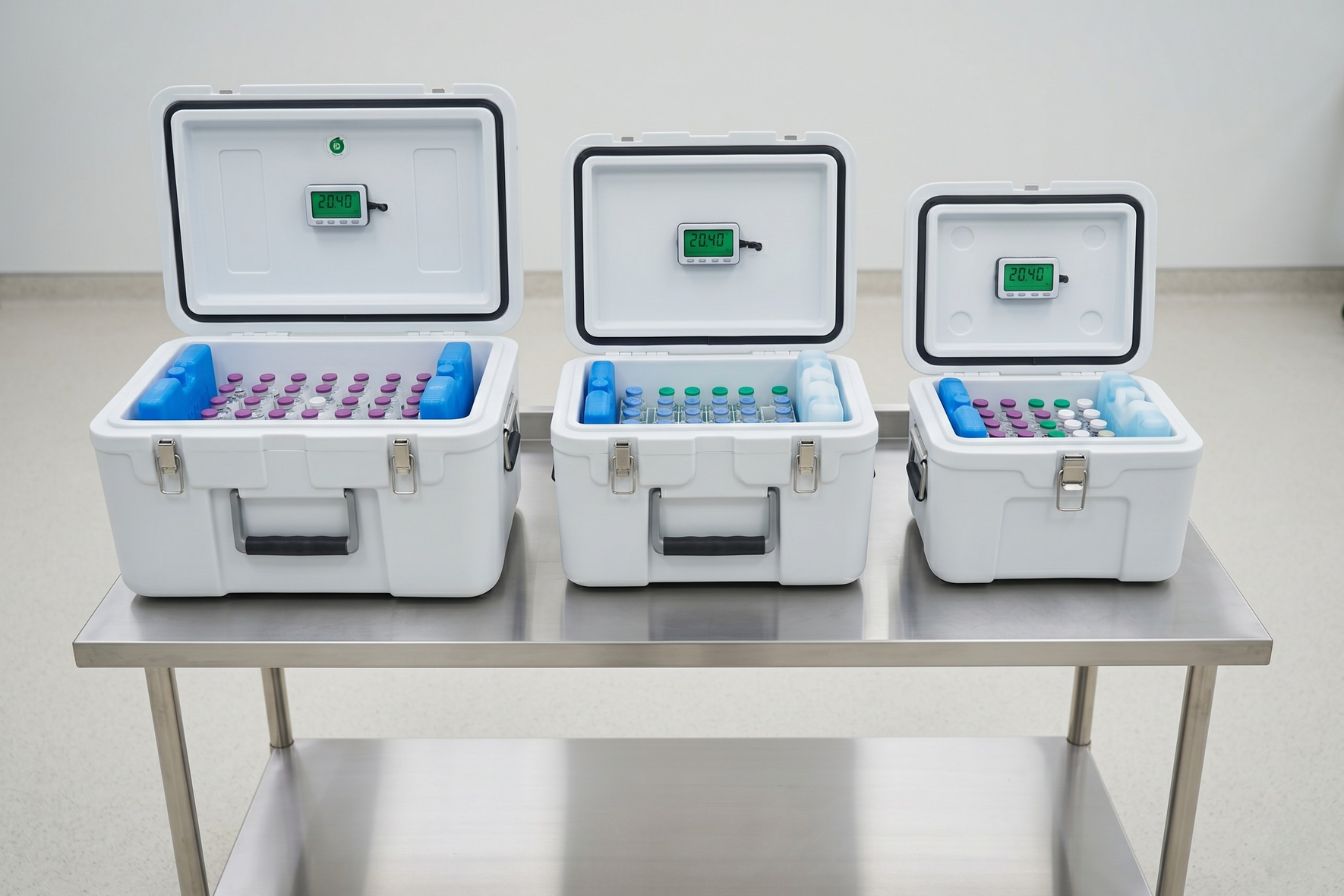
For last-mile delivery, insulated transport coolers and qualified shipping containers handle the final leg of the journey. These smaller units use conditioned cold packs or phase-change materials to hold temperatures for hours at a time. They are the bridge between a full-size portable refrigerator at the distribution center and the patient’s arm at a clinic or pharmacy. Transport coolers must be qualified or specifically engineered for vaccine transport.
How to Build a Portable Cold Chain for Medicine Distribution
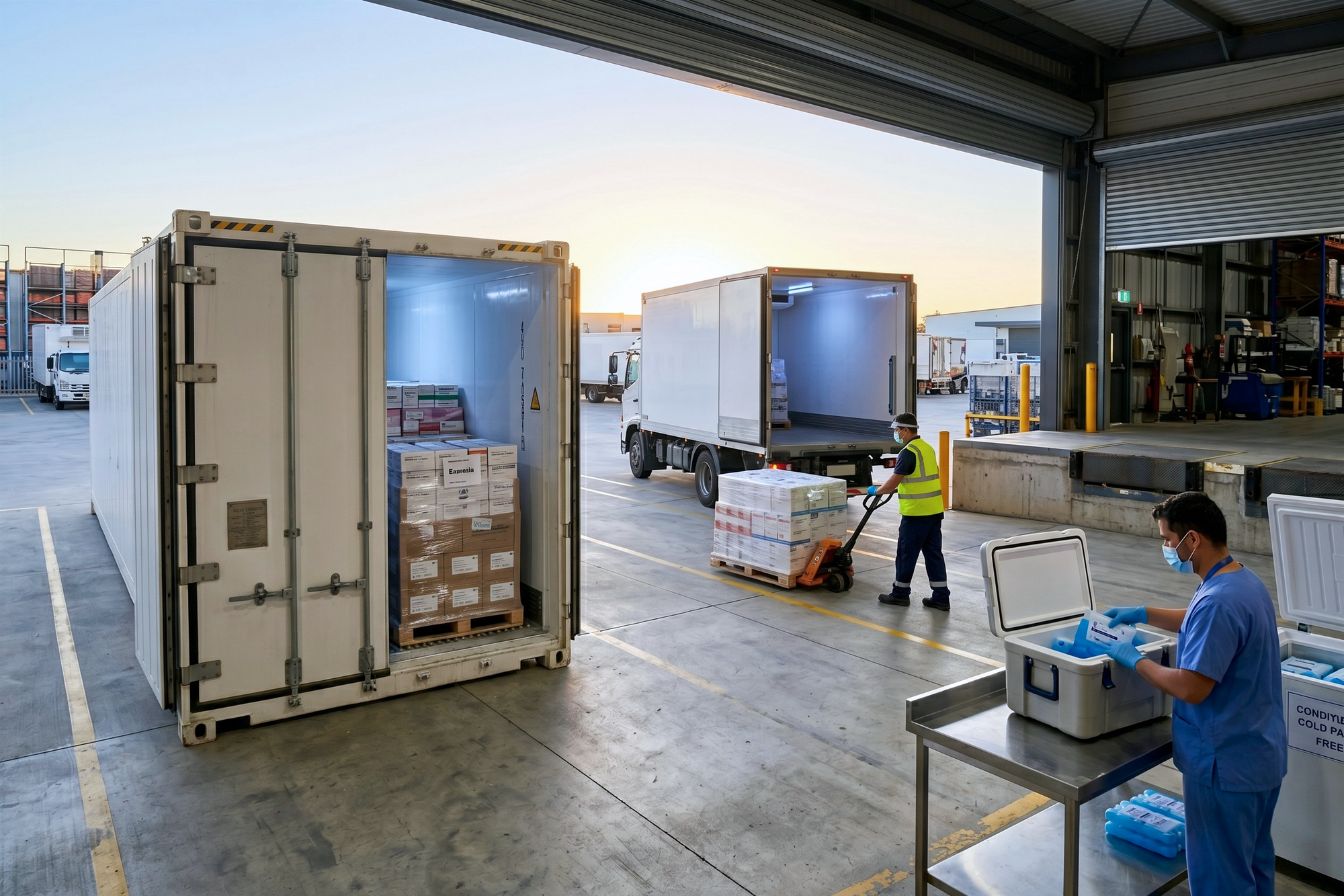
A portable refrigerator for medicine is only one piece of the puzzle. The full cold chain includes storage, transport, and monitoring at every step.
Step 1: Establish a Central Cold Storage Hub
Start with a 20-foot portable cold storage container at your primary warehouse. This is where bulk shipments are received, inspected, and staged. Install digital data loggers connected to a remote alarm system for 24/7 monitoring.
Step 2: Use Reefer Trailers for Regional Transport
Load vaccines into a reefer trailer for transport to satellite locations. The trailer maintains cold storage temperature for medicine in transit and doubles as temporary on-site storage at the destination.
Step 3: Deploy Portable Coolers for Last-Mile Delivery
For the final leg, pack insulated coolers with conditioned cold packs calibrated to the correct range. Include a temperature indicator so the receiving clinic can verify conditions on arrival. A reefer truck may also be useful.
Real-World Applications of Portable Refrigeration in Pharmaceutical Distribution
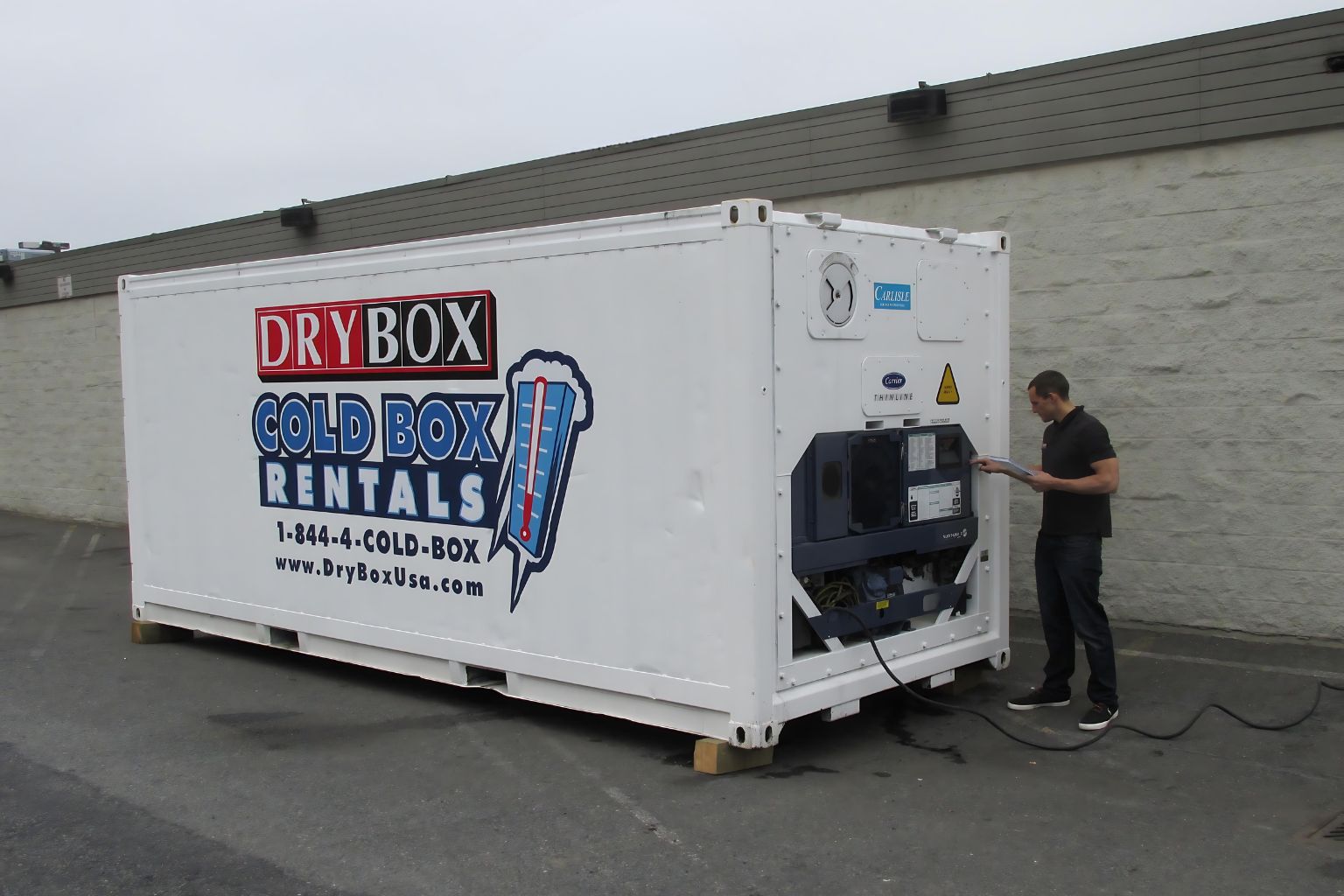
Portable refrigeration plays a growing role in everyday healthcare logistics. Community health organizations running seasonal flu clinics in rural areas often park a 20-foot reefer trailer at the event site to serve as an on-location vaccine refrigerator.
Pharmaceutical wholesalers use reefer containers to add overflow capacity during peak flu season or when demand spikes after new vaccine approvals. Disaster relief teams depend on them to set up temporary medical stations in areas with unreliable power.
A reefer container paired with a generator becomes a self-contained facility for insulin, antibiotics, and vaccines. Shipping containers are built to survive ocean voyages, so they handle harsh field conditions with ease.
What to Look for in a Portable Refrigeration Provider
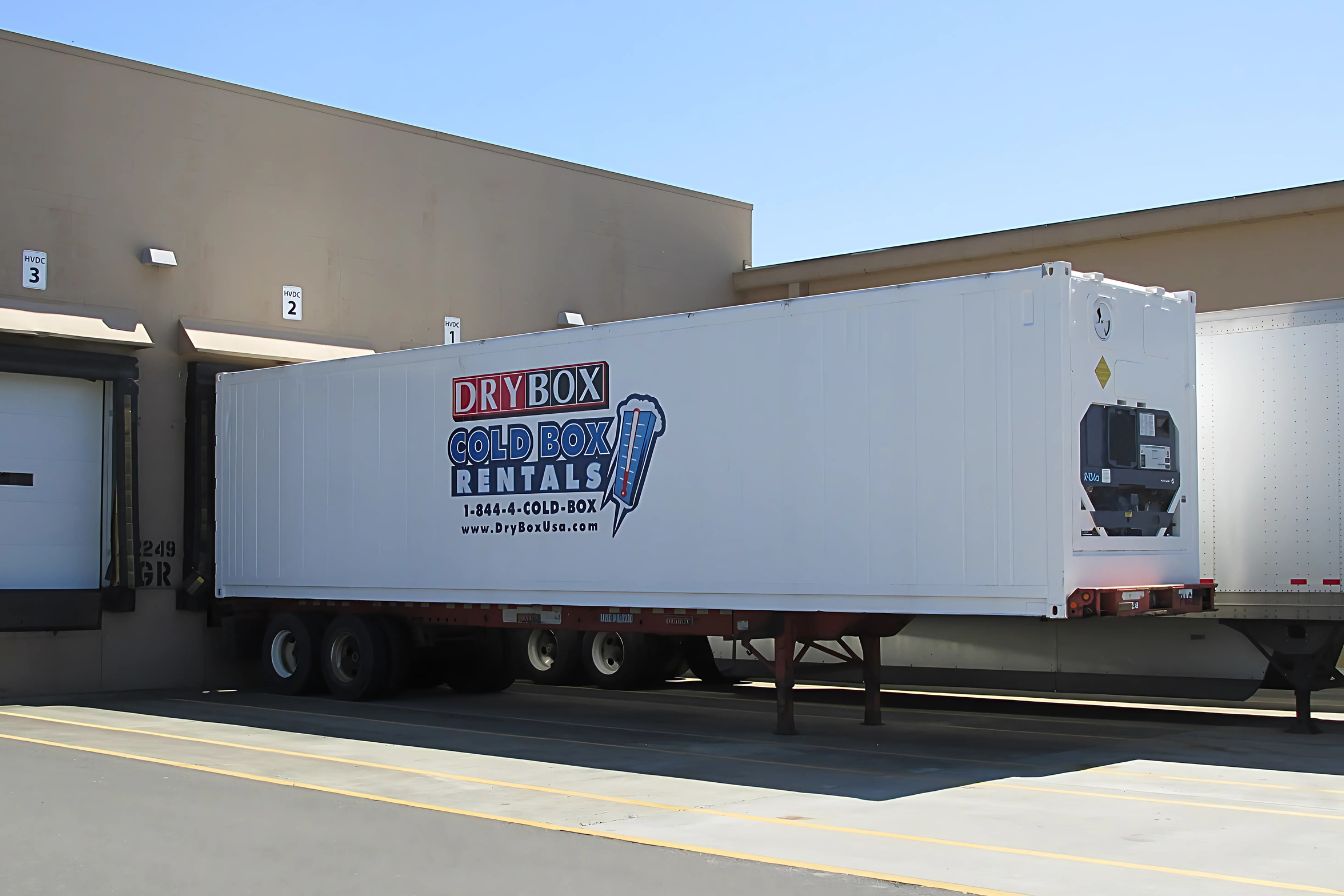
Not every cold storage rental company understands pharmaceutical distribution. When choosing a provider for your medicine transportation business, look for units with precise temperature control down to a single degree. A generic cooler is not the same as a portable refrigerator for medicine that holds 38°F consistently.
Ask about digital monitoring, alarm systems, and maintenance response times. Your provider should offer short-term and long-term rental options so you can scale for a mass vaccination event and back down afterward. Dry Box specialize in reefer containers and trailers with Carrier cooling systems built for accuracy.
Certain units may be configured and qualified for particular temperature-sensitive products, subject to product labeling, thermal mapping, calibrated monitoring, alarms, SOPs, backup power, and customer regulatory approval.
Ready to Protect Every Dose in Your Supply Chain?
Dry Box delivers portable refrigeration solutions built for pharmaceutical-grade temperature control. Get a free quote today and find the right cold storage setup for your distribution operation.
Frequently Asked Questions Vaccine Transportation
Can a portable refrigerator run on solar power for off-grid vaccine storage?
Some reefer containers can pair with solar panels and battery banks, but the refrigeration unit draws significant power. Most off-grid deployments use a diesel or propane generator as backup to ensure uninterrupted cooling.
Do portable cold storage units meet FDA and state pharmacy board requirements?
A refrigeration unit alone does not establish FDA, pharmacy-board, CDC, USP, or other regulatory compliance. Suitability must be determined for the particular product, facility, jurisdiction, configuration, monitoring system, operating procedures, and validated use.
What is the average monthly cost to rent a refrigerated container for medication storage?
Monthly rental rates typically range from $1,100 to $3,000 depending on size, season, rental duration, and location. Delivery and pickup fees are usually separate, so ask for a complete quote.
Can I store both refrigerated and frozen medications in the same portable unit?
A single reefer container operates at one set temperature. Distributors who need both conditions typically rent two units: one at 36°F–46°F for refrigerated products and another at 5°F or below for frozen vaccines.
Disclaimer: This article is for entertainment and informational purposes only and does not constitute medical, legal, or regulatory advice. Always consult the CDC’s current Vaccine Storage and Handling Toolkit and your state pharmacy board for specific compliance requirements. Cold Storage Containers and Dry Box are not responsible for how this information is applied in practice.